Investors often ask, “What are The Factors Affecting Stock Market Performance?” Multiple factors are responsible for shaping investor sentiment and driving share price movements, influencing stock market performance.
Understanding and analyzing these factors in depth can help traders, investors, and research analysts make informed investing decisions. This article explores key drivers impacting stock prices and overall stock market trends, from sentiment and economic indicators to geopolitical events.
Factors Affecting Stock Market Performance
Here’s a snapshot of different factors and their impact on the stock market performance:
Different Factors Affecting Stock Market Performance
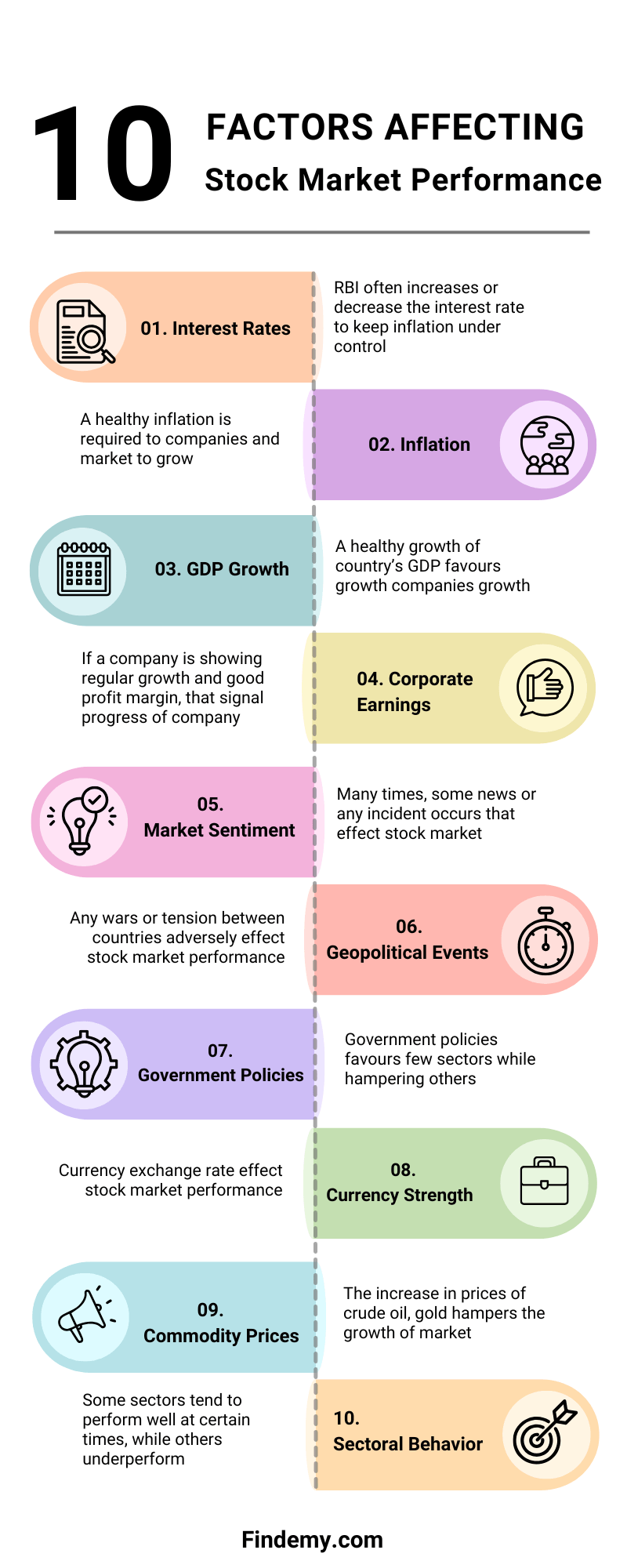
Several factors ranging from macroeconomic to stock-specific events affect the share price and stock market performance respectively. The considerable factors are discussed below.
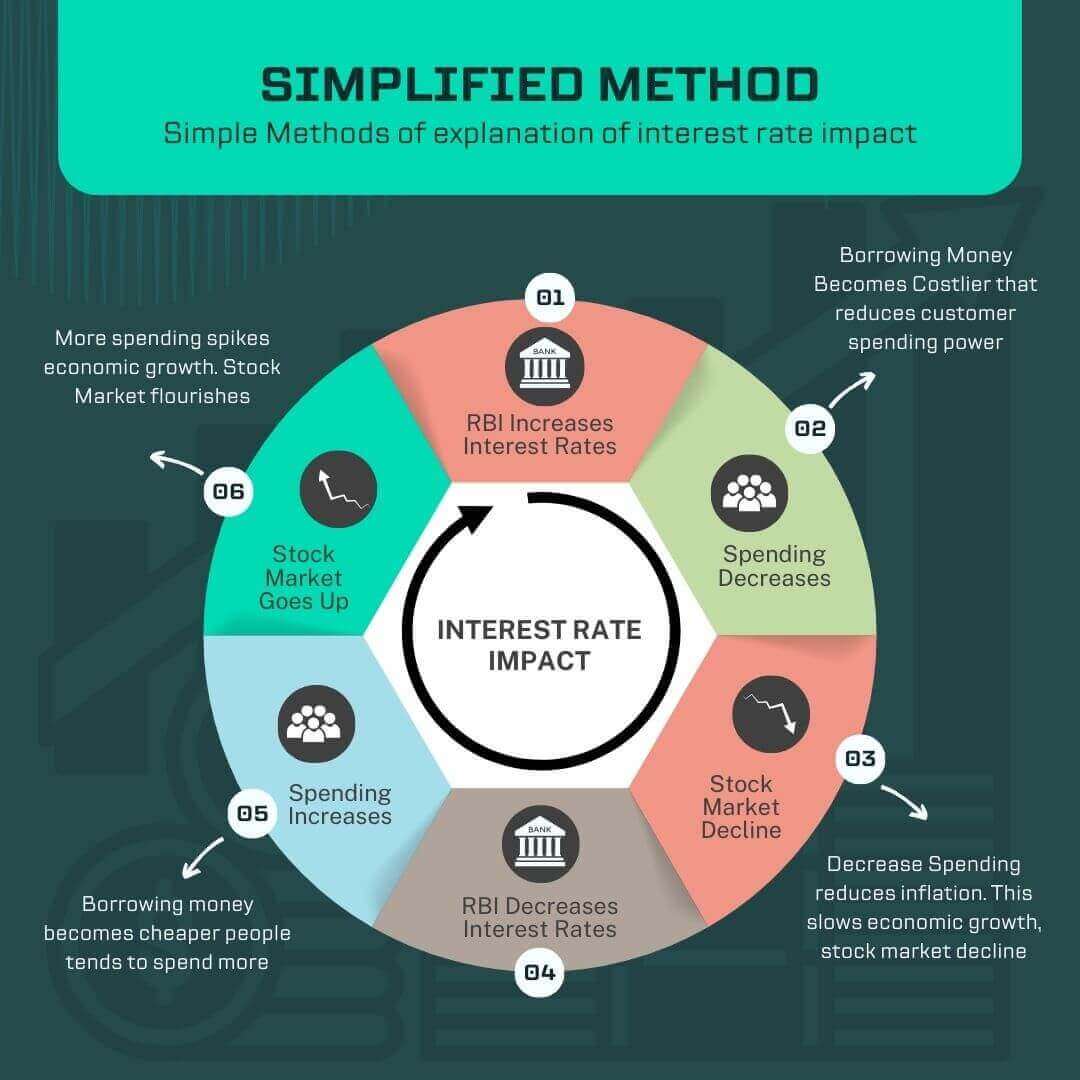
1. Interest Rates and Monetary Policy
The central bank of different countries implements interest rates and monetary policy. The monetary policy affects the stock market performance in the following manner.
- Increases borrowing costs
- Reduces corporate profits
- Lowers investor appetite for stocks, leading to a bearish market.
2. Inflation and Deflation
|
Factor
|
Affect on Stock Market Performance
|
|
Inflation
|
Higher inflation erodes purchasing power, leading to reduced corporate earnings. This creates a market slowdown and thereby hinders stock market performance.Moderate inflation indicates a growing economy and can be beneficial.The Stock Market remains bearish.
|
|
Deflation
|
Deflation (falling prices) signals economic distress, reducing investor confidence in the stock market.Stock Market growth remains slow
|
3. GDP Growth and Economic Indicators
If GDP increases it reflects a country’s growing economy given an increase in corporate earnings. It also boosts the investor’s confidence in the stock market.
| Factor | Affect on Stock Market Performance |
| Unemployment Rate | Higher unemployment weakens consumption demand and in turn corporate profits. It causes the stock market to stay bearish. |
| Manufacturing & Services Index (PMI) | A strong PMI signals economic expansionStock Market usually goes up. |
| Consumer Spending | Higher spending by consumers leads to increased company revenues.It leads to a Stock market boom. |
4. Corporate Earnings and Financial Performance
Stock market performance depends upon the financial health of a company. Investors consider the following financial parameters to determine the performance of a company.
- Earnings per Share (EPS)
- Revenue Growth
- Profit Margins
- Debt Levels and the ability to pay back.
5. Market Sentiment and Investor Behavior
Market sentiment often governs the market direction and perception among investors. A positive market sentiment boosts investor confidence and results in a bull run and vice versa.
6. Supply and Demand
The fluctuation in the prices of stock often happens due to supply and demand variations. A higher demand among market participants increases the price while an increase in supply may lead to falling prices.
External Factors Affecting Stock Market Performance
7. Geopolitical Events and Global Markets
Geopolitical events like wars, government instability, regime change, elections, and terrorism also adversely affect the stock market performance. For example:
- US-China trade tensions affected global stock markets.
- The Russia-Ukraine conflict led to volatility in stocks worldwide.
8. Government Policies and Regulations
Government policies like tax implications, subsidies for business, etc tend to affect the stock market performance in either way depending on whether it is beneficial or not for the company and business.
For Example:
- Lower corporate taxes boost business profitability and foreign direct investment (FDI).
- Stricter environmental laws can increase operational costs for businesses.
9. Currency Fluctuations and Foreign Investment
Currency fluctuations especially those of emerging markets like India have a significant impact on the stock market as they dictate foreign investments. High foreign investments are positive for the stock market while a decrease negatively impacts the stock market performance.
10. Commodity Prices (Oil, Gold, and Metals)
Fluctuations in oil and gold prices affect industries and stock indices:
| Factor | Affect on Stock Market Performance |
| Oil Price | High oil prices increase operational costs for airlines and logistics companies.Stocks of oil-dependent companies may suffer. |
| Gold Price | Gold prices rise during uncertainty such as COVID-19, leading to investment shifts from equities to precious metals.The outflow of funds can lead to a bearish market. |
Final Thoughts
The performance of the stock market is dependent on a variety of factors that have their contribution. While some factors have a small impact others can be big enough to stimulate a bear or bull market. Considering these factors before investing in stocks can prevent the downside associated with the stock market.